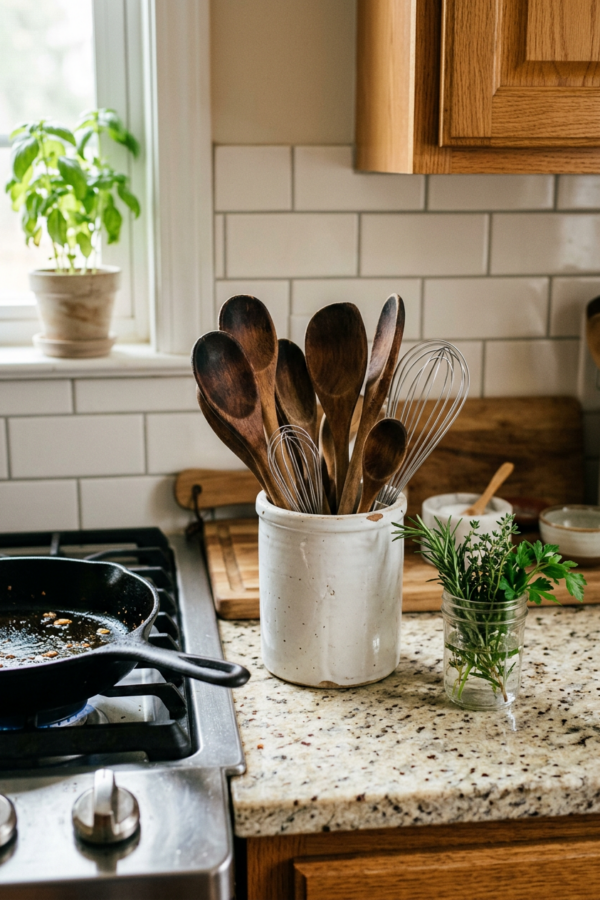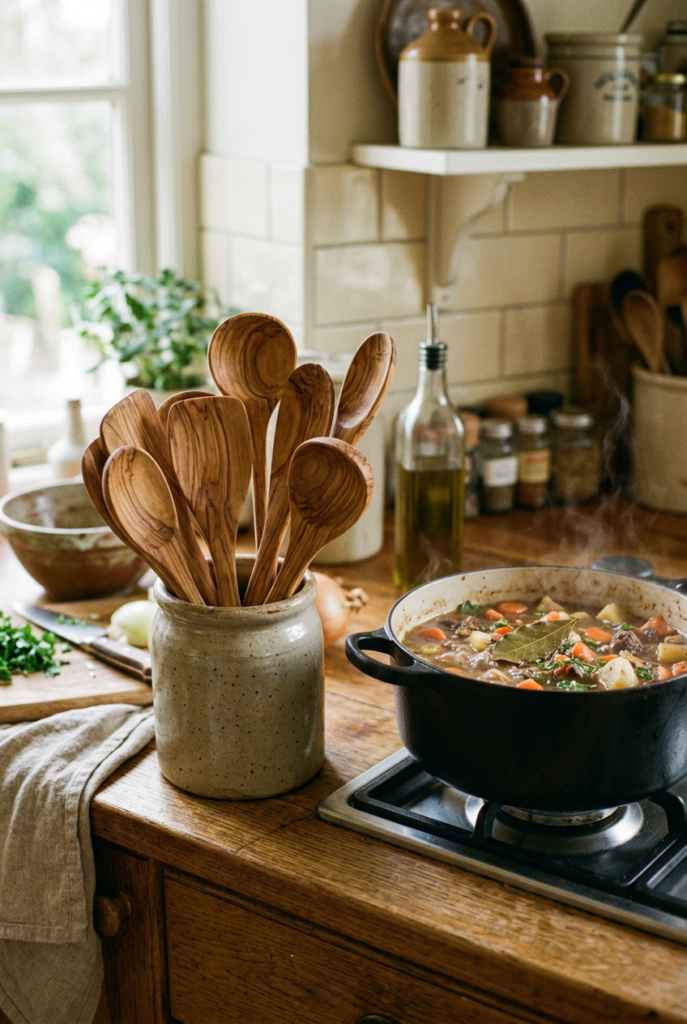
Wooden cooking utensils are gentle on pans, stay cool to the touch, and look beautiful in a crock by the stove. Here is why they are worth having, which woods last longest, and how to care for them.
The Short Answer
Wood will not scratch non-stick, cast iron or enamel, does not conduct heat, and does not react with acidic food. Choose dense hardwoods like teak, olive, beech or maple. Hand-wash, dry right away and oil monthly.
Best Woods for Utensils
| Wood | Notes |
|---|---|
| Teak | Naturally oily and water resistant |
| Olive | Very dense, beautiful grain |
| Beech | Tight grain, affordable classic |
| Maple and cherry | Durable and smooth |
| Bamboo | Light, sustainable, affordable |
Wooden Utensils We Love
- 7-piece wooden kitchen utensil set
- 4-piece wooden kitchen utensil set
- Teak wood soup and serving ladle
- Olive wood honey dipper
- 5-piece stainless tool set with wooden handles
How to Care for Wooden Utensils
- Hand-wash with warm soapy water right after use.
- Dry immediately with a towel and stand upright to air dry.
- Never soak or put them in the dishwasher.
- Oil with food-grade mineral oil once a month.
- Sand rough spots with fine sandpaper, then oil.
Wood and Slow Cookers
A wooden spoon or ladle will not scratch the glazed ceramic crock insert, which is why we use wood for stirring and serving our crockpot soups.
Equipment I Used
- Wooden cutting board with handle: for slicing and serving right at the table.
New to slow cooking? The Easy Slow Cooker Recipes guide is a beginner-friendly collection of easy crockpot breakfasts and dinners.
Wooden Cooking Utensils FAQ
Are wooden utensils sanitary?
Yes, when washed and dried properly. Dense hardwoods resist moisture and bacteria.
Why do wooden spoons crack?
From soaking or the dishwasher. Hand-wash and oil regularly.
When should I replace a wooden spoon?
When it has deep cracks, is fuzzy even after sanding, or holds odors.
Can I use wooden utensils on non-stick pans?
Yes. Wood is one of the best choices for non-stick cookware.