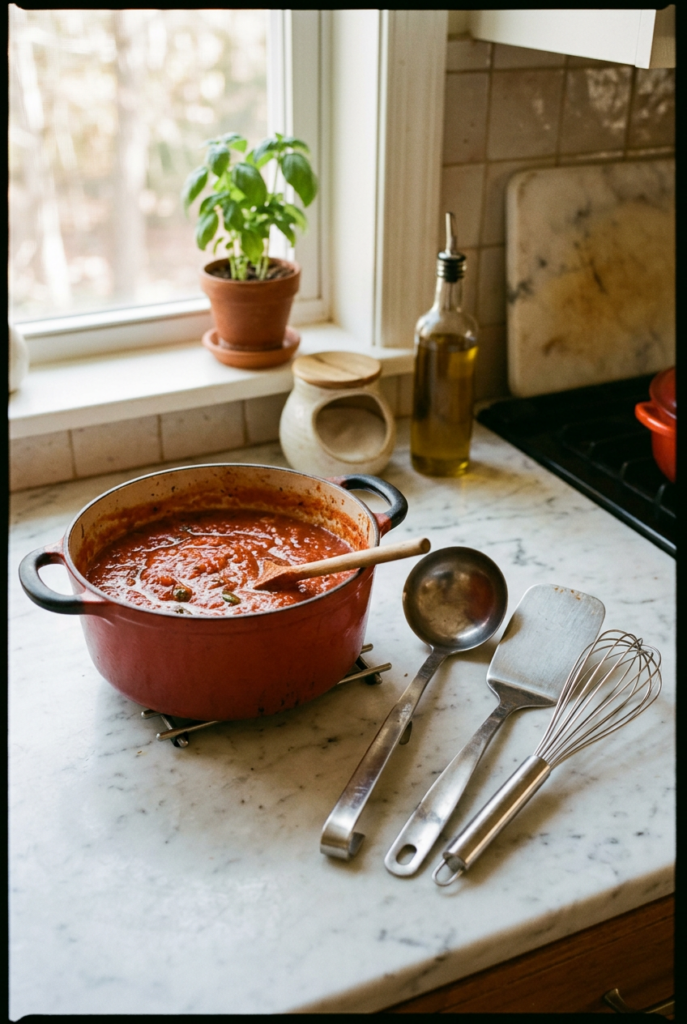
Stainless steel cooking utensils are practically indestructible: they will not melt, stain or hold odors, and they go in the dishwasher. But they can scratch non-stick pans. Here is when steel is the right choice and which tools to own.
The Short Answer
Use stainless steel utensils with stainless steel, cast iron and carbon steel pans, and for grilling and serving. Use wood or silicone on non-stick and enamel cookware. Look for 18/8 or 304 stainless steel with comfortable handles.
Steel vs Silicone vs Wood
| Stainless | Silicone | Wood | |
|---|---|---|---|
| Heat resistance | Excellent | Very good | Good |
| Safe on non-stick | No | Yes | Yes |
| Dishwasher | Yes | Yes | No |
| Lifespan | Decades | Years | Years with care |
Stainless Tools Worth Owning
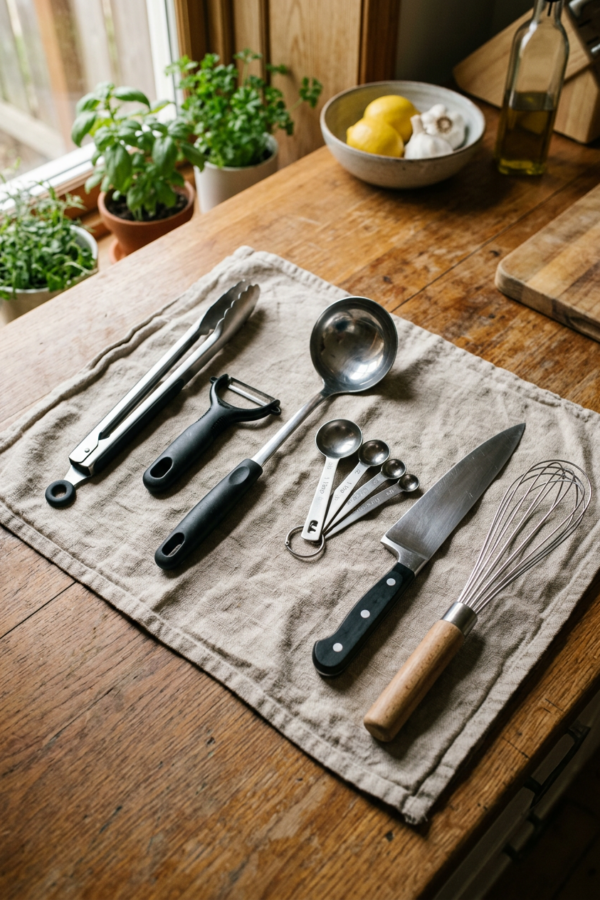
- 12-inch non-slip stainless tongs
- 304 stainless wok spatula and utensil set
- Long handle stainless soup ladle
- Stainless colander skimmer
- Stainless filter spoon with wooden handle
- Stainless measuring cups and spoons
Care Tips
Wash in hot soapy water or the dishwasher and dry to prevent water spots. Remove discoloration with a little white vinegar. See how to clean stainless steel.
Equipment I Used
- Stainless steel measuring cups and spoons: for sauces and spice blends.
New to slow cooking? The Easy Slow Cooker Recipes guide is a beginner-friendly collection of easy crockpot breakfasts and dinners.
Stainless Steel Cooking Utensils FAQ
Are stainless steel utensils safe?
Yes. Food-grade stainless steel is non-reactive and durable.
Can I use stainless steel utensils on non-stick pans?
No. They can scratch the coating. Use silicone or wood instead.
What is 304 stainless steel?
A common food-grade steel, also called 18/8, with good corrosion resistance.
Do stainless steel utensils get hot?
The metal can warm up; handles with wood or silicone stay cooler.